

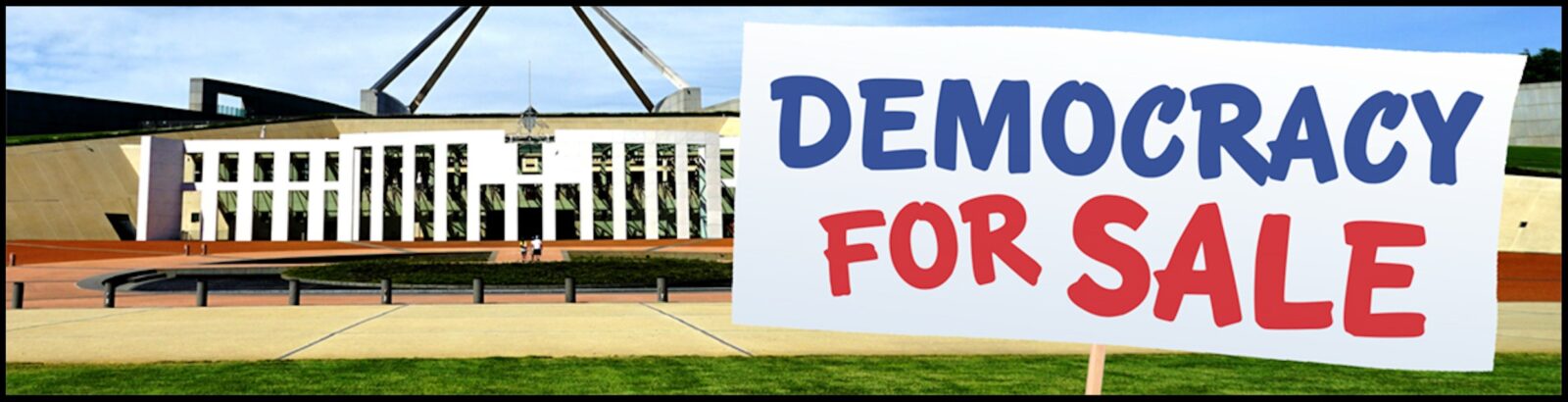
Big Tobacco is using the booming illicit market to relentlessly lobby government to undermine public health policies, writes Professor Christina Watts.
With the rise in illicit tobacco sales in Australia, tobacco control policy has become a headline issue. But while the debate over tobacco taxation has dominated public discussion in recent times, Big Tobacco has been lobbying tirelessly behind closed doors to unravel Australia’s strong public health policies.
These efforts are the latest chapter in a long-running campaign to weaken tobacco control measures and protect industry interests – well preceding the rise in illicit tobacco.
The state of play – the tobacco wars and excise debate
Experts unequivocally agree that there has been a substantial growth in the illicit tobacco market in Australia. The report from the Illicit Tobacco and E-cigarette Commissioner released in 2024-25 estimated the size of the illicit tobacco market to now be around 50-60% of Australian tobacco consumption.
Among some groups this is likely higher, with one study showing 80% of recent tobacco purchases among young adults were likely illicit. Australia is losing approximately $7.7 billion-$11.8bn annually in tobacco tax due to the illicit market.
With an estimated 40,000 tobacco retailers across the country, the lack of controls on where tobacco can be sold has contributed to a rapidly expanding illicit tobacco market, where organised crime networks have leveraged this widespread retail network for the supply of illicit products.
“While the debate over tobacco taxation has dominated public discussion in recent times, Big Tobacco has been lobbying tirelessly behind closed doors to unravel Australia’s strong public health policies”
The debate on how to reduce the illicit tobacco crisis has largely centred around one policy: tobacco excise. Some argue that a significant reduction of the tobacco excise is necessary to lower the price gap between illicit cigarettes, which can cost as low as $7-$10 a pack, and regulated packs which cost around $40 for a budget brand.
Others, including public health researchers and health bodies, argue risk making both regulated and illicit tobacco products more affordable overall, which can increase smoking initiation and consumption.
Enforcement efforts are beginning to make a difference. In Victoria, new laws that came into effect in September allow regulators to close retailers selling illicit tobacco for 90 days. In the first two weeks, 48 stores were shut down.
“The illicit tobacco market is estimated to be around 50-60% of Australian tobacco consumption”
While there are reports some retailers are changing tactics to evade detection, these closure orders are an important step towards reducing the visibility, availability and ease with which illicit tobacco products can be purchased.
Despite the growth in the illicit market share, the latest national smoking prevalence data indicates that smoking is at a record low, with 5.6% of the population smoking daily.
With the high cost of tobacco remaining the most common motivational factor behind reducing smoking, the debate over tobacco excise could have serious implications for public health.
“Despite the growth in the illicit market share, the latest national data indicates that smoking is at a record low”
The tobacco industry has for many decades lobbied governments to not raise tobacco taxes, or to roll them back.
In Canada in the 1990s, tobacco companies received the largest criminal fines in Canadian history for their involvement in a large-scale tobacco smuggling scheme that helped drive the political case for tobacco tax cuts.
“In Canada, tobacco companies were caught in a large-scale tobacco smuggling scheme – that helped drive the political case for tobacco tax cuts”
Against this backdrop of Australia’s illicit tobacco crisis, it is unsurprising that the tobacco industry is mobilising all available channels of influence in an effort to roll back effective tobacco control policies.
Please consider supporting The Klaxon here

Independent Senator David Pocock has led the charge in lobbying reform. Picture: Lukas Coch/AAP Image
Secret meetings and hearings
For the first time in years, tobacco lobbying efforts have been getting traction and favour with political parties. One of the biggest concerns is the lack of transparency surrounding these activities.
Tobacco companies were once excluded from policy debates, but they are now gaining private audiences with political leaders, away from public scrutiny.
“For the first time in years, tobacco lobbying efforts have been getting traction and favour with political parties”
In two Australian parliamentary inquiries this year, Philip Morris Limited was invited to give evidence in-camera (privately). At the Senate Inquiry into the Illegal Tobacco Crisis in Australia Tobacco Trade in May, and the New South Wales Parliament Illegal tobacco trade inquiry in February.
The speakers list for both inquiries did not include Philip Morris Limited as even appearing at the hearing.
“In two Australian parliamentary inquiries this year, Philip Morris Limited was invited to give evidence in-camera”
Philip Morris Limited’s testimonies to these inquiries were provided behind closed doors without the benefit of public scrutiny or critique of the evidence provided to the committee. It provided an opportunity for the tobacco company to directly lobby for a cut in the tobacco excise that will directly benefit the company’s bottom line.
In 2023 Independent Senator David Pocock raised concerns about tobacco industry lobbyists getting unescorted access to parliament house through the orange parliamentary pass system, after he was approached by a uninvited tobacco lobbyist in his office.
The parliamentary access pass system has since been overhauled, requiring lobbyists to register for a pass that must be signed by two MPs.
The revolving door of tobacco lobbyists
While lobbyists can no longer roam the halls of Parliament House unescorted at any time of the day, significant gaps remain in lobbying transparency.
Federally only third-party lobbyists (those working for lobbying firms and acting on behalf of another company) are required to register on the lobbyist register.
This means that lobbyists employed by tobacco companies like Philip Morris Limited and British American Tobacco do not need to register.
“Lack of enforcement of Australia’s Lobbying Code of Conduct has meant that the revolving door is rampant”
Lack of enforcement of Australia’s Lobbying Code of Conduct has also meant that the revolving door is rampant – when individuals move between positions in government and industry – a widely recognised lobbying tactic that aims to share insider information, develop relationships with people of influence and establish quid pro quo contributions to industry.
Our investigation into the revolving door of tobacco lobbyists found that almost half (48%) of internal tobacco company lobbyists, and 55% of third-party lobbyists representing the tobacco industry, had held government positions before or after working in the industry, many of whom had made the move within one year of working as a tobacco lobbyist.
“Almost half of internal tobacco company lobbyists held government positions before or after working in the industry”

Australia’s “billionaire problem” – more in our series “Democracy for Sale”. Source: The Klaxon
Political donations from tobacco companies
Political donations have long been a mechanism of influence for the tobacco industry, having donated over $2.5 million to political parties since 1998-99. The Australian Labor Party was the first party to announce it would no longer accept tobacco company donations in 2004, with the Liberal Party following suit in 2013.
The Nationals and Liberal Democrats (now Libertarian party) continue to receive tobacco industry donations. In 2024-25 the Nationals received $225,500 from two major tobacco companies, British American Tobacco and Philip Morris Limited.
One Nation received $30,000 in donations across 2018/19 from lobbying firm Strategic Political Counsel, which at the time was contracted to lobby for British American Tobacco to legalise the sale of e-cigarettes as consumer goods.
The Nationals argue that tobacco company donations do not influence their policy positions. Michael Kauter, who headed Strategic Political Counsel while it represented British American Tobacco, also denied that the donations to One Nation were connected to his lobbying work.
Nevertheless, the tobacco and vaping policy positions adopted by both One Nation and the Nationals are in alignment with those of the tobacco industry, with both parties vowing to drastically cut the tobacco excise and legalise the sale of vapes and nicotine pouches as consumer goods.
Protecting health policy from the vested interests of tobacco lobbyists
We are at a critical time in Australian tobacco control. Arguably, tobacco lobbyists have more access to policymakers than at any point in recent decades, and we are potentially seeing the outcomes play out in real time.
Major tobacco excise cuts of 75%-80% are being advanced as key election policies by One Nation and the Coalition.
If Australia is to preserve some of its most successful public health achievements, our obligation to protect public health policy from the vested interests of the tobacco industry has never been more important than it is now.
Dr Christina Watts, Research Fellow, The Daffodil Centre, The University of Sydney
This article is first published by The Klaxon and 360info.org
Quality independent journalism is vital to our democracy. Please consider supporting us for as little as $10 a month, or by making a one-off donation of any amount here.
Thank you,
Anthony Klan
Editor, The Klaxon


