


The fossil fuels playbook works best in the dark, but there are signs the lights are coming on, writes Dr Robyn Gulliver…
ANALYSIS
The fossil fuel playbook is hardly a secret. Refined by Big Tobacco and perfected over decades of corporate statecraft, the formula is familiar enough: manufacture doubt, then manufacture delay.
We also know the mechanisms well, from political donations, to revolving doors, and soft-power sponsorship.
The real question isn’t how the playbook works. It’s why, when everyone can see the moves in plain daylight, we still can’t seem to break its grip.
A state of whiplash
Consider the cognitive dissonance.
The International Energy Agency said in 2021 that no new oil and gas fields can be developed if we are to reach net zero. The UN Secretary-General has called for tobacco-style bans on fossil fuel advertising.
Meanwhile, forecasters warn of intensifying El Niño cycles, bringing Australia record heat, prolonged drought, and catastrophic fire conditions.
Yet on home soil, coal and gas companies remain legal political donors in every Australian jurisdiction. Their lobbyists roam Parliament House and crowd climate summits. Their logos sit on footy jumpers and bike races while they reach into our nation’s classrooms through more than 500 programs for children.
And a government that says it takes climate seriously has approved 37 new or expanded coal, oil and gas projects since 2022, including extending the North West Shelf to 2070.
That is the playbook’s crowning achievement: moving the debate about fossil fuels and climate change out of the discredited discourse of denial and into the language of delay. It is a delay that has bought decades of record profits for the industry, paid for with decades of stolen time for the rest of us.
How did we get here? Through four deliberate moves.
1. Fund both sides, then fund the outsiders.
The strategy starts by neutralising political risk. The resources sector gave $136.8 million to parties in the 20 years to 2019, more than any other industry in the country.
Analysis of Australian Electoral Commission disclosures by watchdog groups like Market Forces confirms the industry systematically hedges its bets, consistently splitting millions in annual donations between both major parties.
Increasingly, money flows through opaque third-party campaign vehicles: Coal Australia put $3.68 million into Australians for Prosperity to promote fossil fuel interests, and Hancock Prospecting tipped $895,000 into Advance.
These investments reach far beyond domestic energy debates. UTS researcher Dr Jeremy Walker documented what he identifies as a “fossil-fuelled” campaign by Atlas Network partners against the 2023 Voice referendum.
This was driven in part by industry anxiety that entrenched Indigenous land rights and consultative bodies could constrain future extraction projects.
“This was driven in part by industry anxiety that entrenched Indigenous land rights and consultative bodies could constrain future extraction projects”
2. Stay off the register.
While political donations make headlines, daily influence happens out of sight. Integrity experts estimate about 80 per cent of federal lobbying falls outside the rules, shielded by an exemption that excludes in-house corporate lobbyists from registration requirements.
Multinational giants like Santos do not appear on the federal register at all.
State-level surges reveal how surgical this access is: our analysis showed gas lobbying registrations more than doubled in Victoria and surged five-fold in South Australia during the lead-up to proposed municipal gas bans, only to evaporate once the votes settled.
Transparency International scores Australia’s federal lobbying oversight system and abysmal 17 out of 100, and to date, not a single lobbyist has faced sanction despite recorded breaches.
Please consider supporting The Klaxon here

Then Coalition Energy Minister Josh Frydenberg hands then Coalition Social Services Minister Christian Porter a lump of coal in parliament in 2017. Picture: Mick Tsikas/AAP (Image top: An open-cut mine. Source: Adobe).
3. Capture a state, then hire its people.
Where regulation threatens to bite, the playbook secures state-level architecture and absorbs the decision-makers themselves. Western Australia famously structured its tax agreements to collect zero royalties on about $111 billion of gas sales from Woodside’s Pluto project.
The political talent pipeline runs both ways. The revolving door spins constantly without meaningful cooling-off periods: former federal Resources Minister Martin Ferguson moved directly to chair the gas lobby’s advisory board; former WA Treasurer Ben Wyatt joined the boards of Woodside and Rio Tinto shortly after leaving office; former NT Deputy Chief Minister Nicole Manison took an executive role with fracking company Tamboran within three months of departing politics; and Gary Gray traversed the circuit from Woodside, to resources minister, to Mineral Resources.
4. Own the story. Finally, ensure the public narrative reinforces the policy capture. Mining and petroleum advertising reached $48.45 million in the first quarter of 2026 alone, with the gas lobby openly telling a Senate inquiry it stood ready to spend up to $7 million fighting a single proposed gas export levy.
Rebranding does the cultural legwork. After rebranding from APPEA to Australian Energy Producers, the lobby launched massive campaigns like Australia Runs on Natural Gas alongside industry-commissioned polling from JWS Research, claiming upwards of 80 to 86 per cent of Australians believe natural gas must retain an enduring role in the country’s energy mix.
That manufactured consensus translates directly into political cover. The ultimate measure of success? The federal government’s Future Gas Strategy adopted the lobby’s framing and timelines championing fossil fuels, blindsiding Labor’s own backbench and locking in fossil infrastructure for decades to come.

The use of fake “community group” fronts by fossil fuels, or “astroturfing”, is undermining democracy, say experts. Source: The Klaxon
The lights are coming on
It would be easy to despair. But the playbook works best in the dark, and the lights are coming on.
Grassroots legal wins are stalling mega-projects like Mount Pleasant coal mine expansion in the Hunter. Global courts are establishing state liability for climate harm from fossil fuel production.
Major arts festivals are ditching fossil sponsors under community pressure, and incoming transparency laws will soon expose political donations in weeks rather than months.
Crucially, we already have a proven template. Australia broke Big Tobacco’s grip on public health not by pretending the harm didn’t exist, but by dismantling its institutional access: banning political donations, stripping branding from community life, and blocking industry off from policymaking.
“Australia broke Big Tobacco’s grip on public health not by pretending the harm didn’t exist, but by dismantling its institutional access”
Applying that same standard to coal and gas is entirely achievable. We can outlaw fossil fuel donations, enter every in-house lobbyist onto the register, enforce real cooling-off periods, and push fossil fuel interests out of classrooms.
Australia has already proved we can strip a harmful industry of its political veto. Doing the same to the one heating the planet is long overdue.
Dr Robyn Gulliver is a Research Fellow at the University of Queensland.
This article is first published by The Klaxon and 360info.org
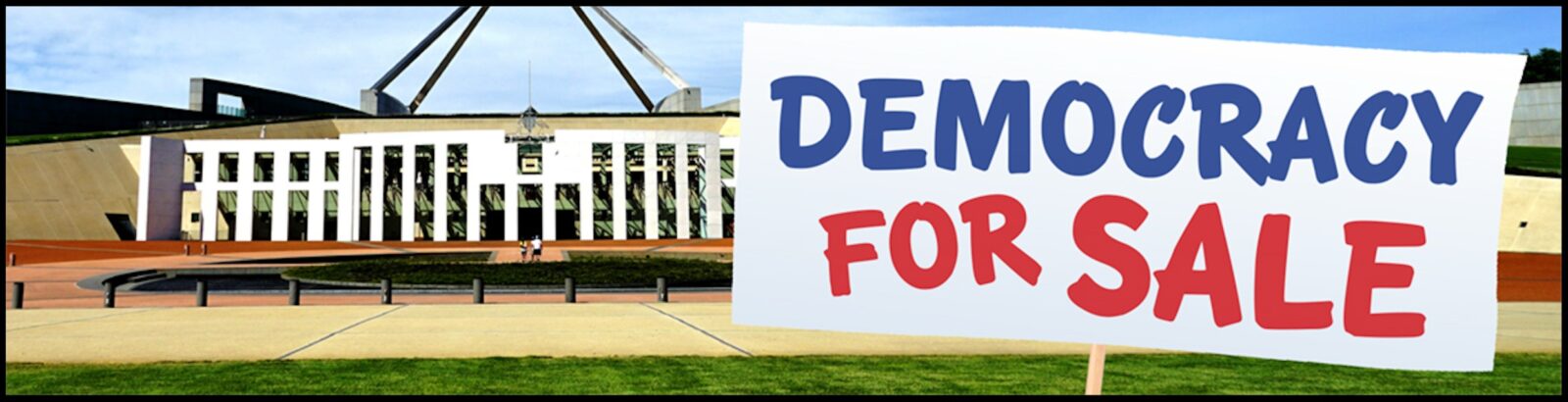
You can read the rest of our Democracy for Sale series here.
Quality independent journalism is vital to our democracy. Please consider supporting us for as little as $10 a month, or by making a one-off donation of any amount here.
Thank you,
Anthony Klan
Editor, The Klaxon


